Exclusive: Emre B. Argunsah on his book "Black Force Krav Maga - The Complete Training Guide", fighting system, and more
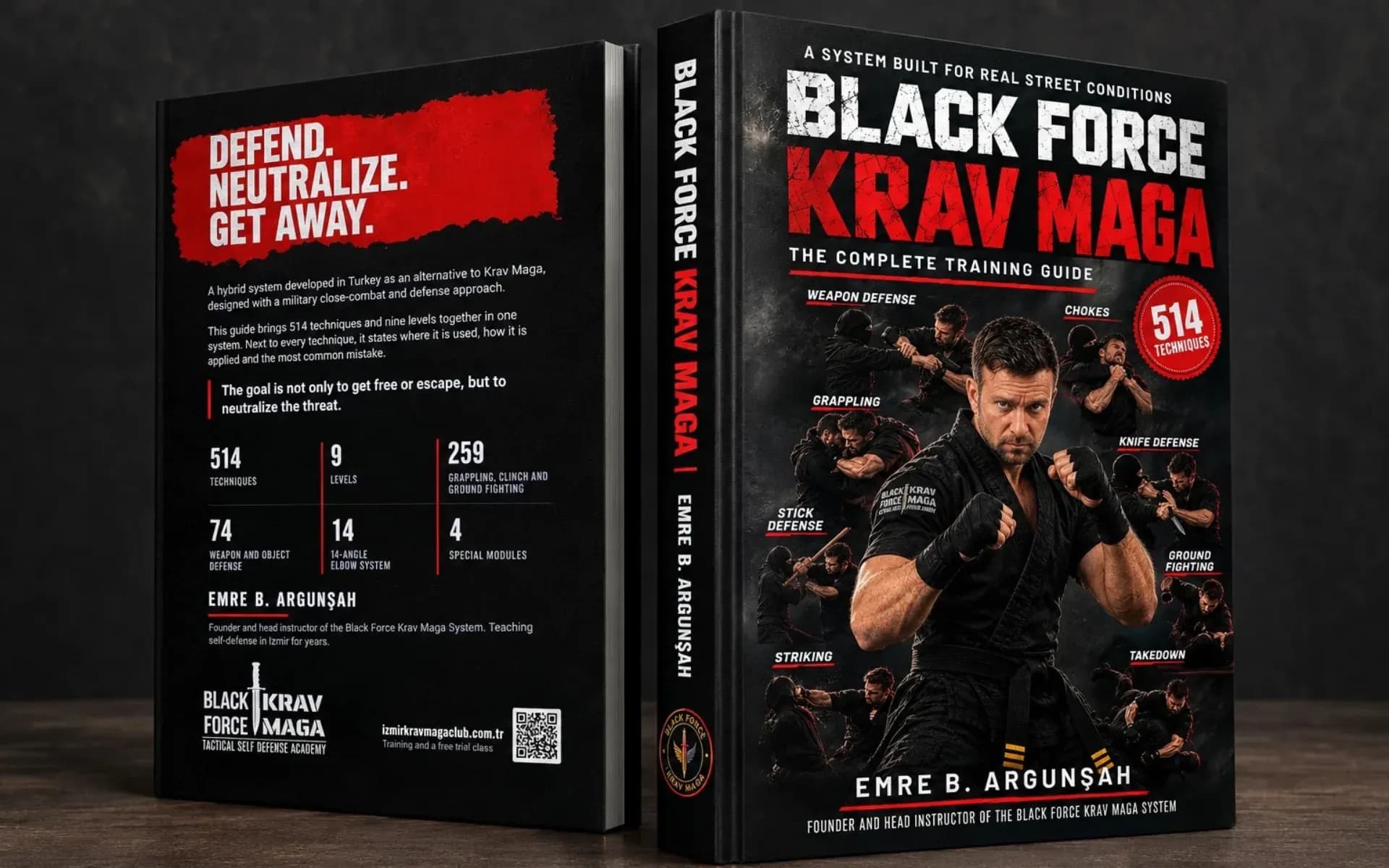
Krav Maga savant Emre B. Argunşah has opened up about his book "Black Force Krav Maga: The Complete Training Guide", combat system, and more.
Krav Maga expert, Master Emre B. Argunşah -- of the world-renowned İzmir Krav Maga Club -- has forged an incredible legacy as a martial artist and self-defense trainer.
The popular Krav Maga instructor has trained students in his native İzmir, Türkiye, and beyond for a number of years.
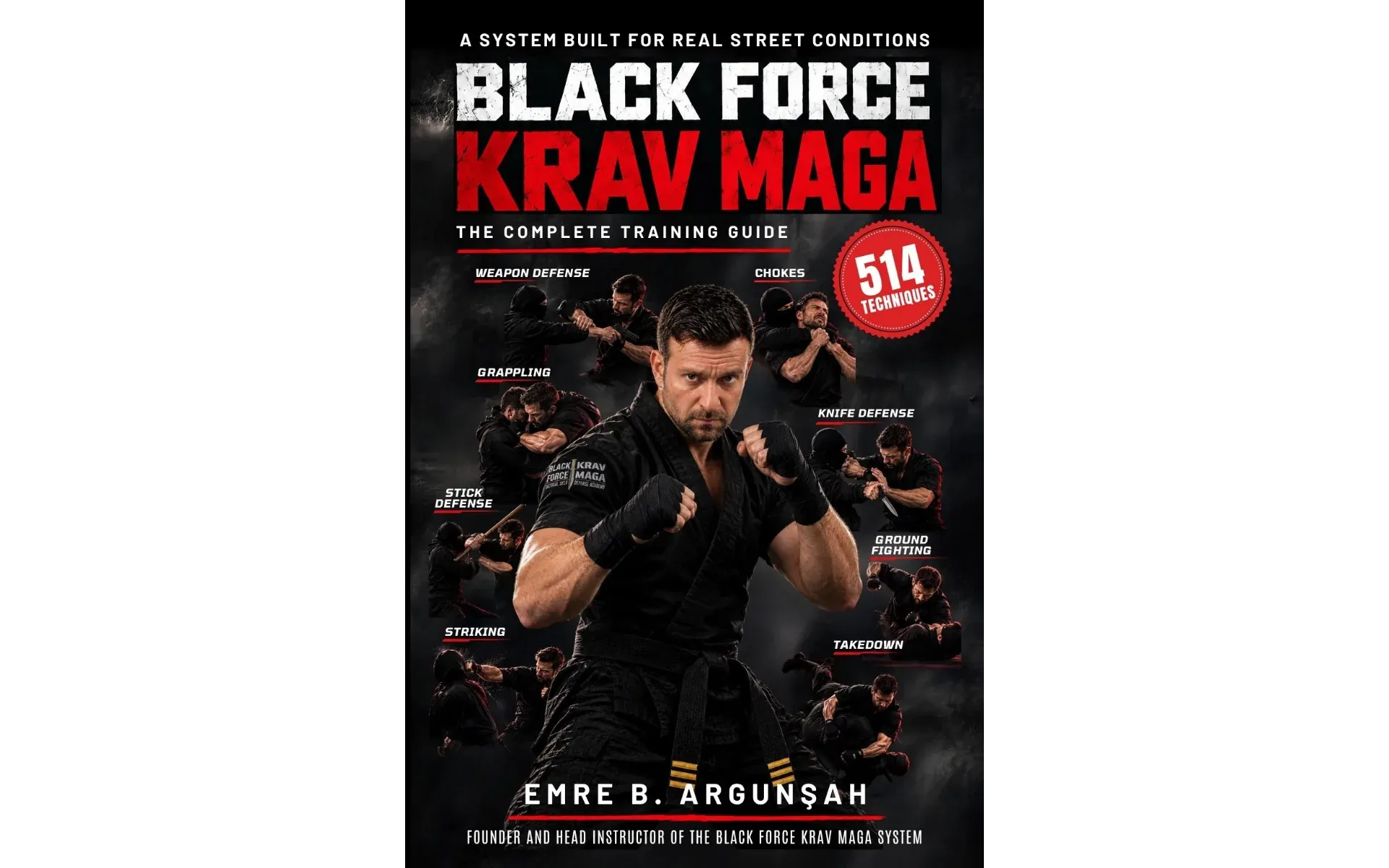
Argunşah has lately been making waves with his book, namely "Black Force Krav Maga: The Complete Training Guide."
His system focuses on teaching swift and clutter-free techniques for unarmed striking, grappling, as well as weapon combat (stick fighting, knife fighting, etc.). It includes offense and defense in ground fighting scenarios -- takedowns, chokes, and more.
His book has elicited considerable praise from fans and experts in the martial arts realm for its combat philosophy, real-life applications, and more. Well, our team at MMA Sucka recently had the honor of asking the martial arts maestro a few questions!
Master Emre B. Argunşah -- Founder of the İzmir Krav Maga Club and Black Force Krav Maga System
Emre B. Argunşah is a revered maestro in the martial art of Krav Maga and is known to have developed a unique fighting system of his own, the Black Force Krav Maga System. He's also the founder of the İzmir Krav Maga Club situated in İzmir, Türkiye.
Argunşah was born in Ankara, Türkiye (then known as Turkey), in the year 1983. He's known to be a Level 2 Instructor of the Kapap Federation and Turkish Krav Maga. He also holds the honor of representing Türkiye in the Elite Defense International. He's an Expert Instructor at the Elite Defense Academy.
Argunşah extensively trains civilians as well as highly trained professionals (police officers, military personnel, combat sports athletes, etc.) in the art of Krav Maga.
It's noteworthy that while Krav Maga is central to his teachings, his Black Force Krav Maga System is deemed by many as a unique fighting style that also incorporates elements from other martial arts such as Silat and Kali. He's also blended combat lessons learned from his experience in Türkiye and martial arts from various regions to masterfully boost his martial arts system.
Also, Argunşah tailors his coaching to suit the current level his student is at, gradually helping them improve and ascend to higher skill levels.
While civilian students generally prefer learning the basics first, his Black Force Alpha Program is more focused on military-style combat training. It draws from martial arts such as BJJ, Japanese Jiu-Jitsu, wrestling, Judo, Silat, Kali; of course, with Krav Maga being the central theme.
"Black Force Krav Maga: The Complete Training Guide" -- Emre B. Argunşah's book
Emre B. Argunşah recently emphasized that he made his book -- "Black Force Krav Maga: The Complete Training Guide" -- accessible to readers in both languages, Turkish and English. It comprises an in-depth look at his fighting system.
Moreover, Argunşah announced that he's made the book, which contains vast knowledge of extraordinary value, available to the public for free, as it aligns with his primary goal of enlightening people about his fighting system and its uses.
It's a 594-page book, which entails 514 techniques, bringing Argunşah's system's nine-volume curriculum together in one volume. The veteran martial artist's book aims to teach where to utilize each technique, how to apply the techniques, the most common mistake people make in a technique, as well as how to practise and master the techniques for optimal utilization.
MMA Sucka's conversation with Master Emre B. Argunşah
We recently conversed with Master Emre B. Argunşah and discussed a few intriguing developments in his mission to spread awareness about self-defense and martial arts worldwide.
Among the notable topics discussed were his martial arts system and self-defense book titled "Black Force Krav Maga: The Complete Training Guide." Argunşah shed light on it -- explaining his unique fighting system, its real-life applications for people of different skill levels, ages, and genders, and much more.
Listed below are a few questions posed to Master Emre B. Argunşah and his answers (the latter within double quotation marks). Without further ado, let's get to it!
Why are there soldiers and police officers among your students? What draws them to Krav Maga?
Krav Maga, which implies contact combat, has its origins in Bratislava, Slovakia, in the 1930s. It's known to have been developed by Hungary-born Israeli martial artist Imi Lichtenfeld (Imre Lichtenfeld), primarily as a practical, easy-to-learn and use self-defense system.
It was subsequently popularized in military establishments, police departments, as well as among civilians in various countries. The Israel Defense Forces (IDF) adopted Krav Maga, courtesy of Lichtenfeld's guidance. Similarly, other countries such as the United States of America, Türkiye, and France, to name a few, also utilize Krav Maga to train their law enforcement and military forces.
The martial art of Krav Maga prioritizes the use of martial arts techniques in real-world self-defense scenarios rather than in a sport setting. Ergo, eye gouges, groin strikes, and melee combat are also covered in the educational system of the art, ensuring that its practitioners can level the playing field and defend themselves against stronger attackers as well.
When asked why defense personnel like police officers and soldiers join him as students, Emre B. Argunşah stated, "Krav Maga came out of the military world, and it's still part of military, police, and security training in many countries. It isn't flashy, and the basics can be learned in a relatively short time."
He seemingly referenced his system's focus on educating his students to neutralize a threat(s) without using disproportionate force. Argunşah also touched upon the teamwork aspect in certain situations and said, "Black Force also teaches what they need on duty: controlling a person without injuring them, team tactics, and protecting the person next to you."
Do athletes from other combat sports come to your classes? What surprises them most?
In response to the aforementioned question, Argunşah appeared to hark back to one of the most significant elements that makes Krav Maga different from many other martial arts.
He explained, "Yes, boxers, wrestlers, and kickboxers. What surprises them is that on the street nobody squares up; it starts with a grab or a push, often from behind."
A point that many proponents of Krav Maga often highlight is that the attacks on sensitive points, usually prohibited in most traditional martial arts and combat sports contests, aren't banned in Krav Maga. They underline that the biological differences between males and females -- hormonal and bone density differentials -- usually give males of similar stature an edge in strength and other physical aspects. But Krav Maga helps circumvent the same.
Argunşah's Black Force Krav Maga System emphasizes that targeting the sensitive points of an attacker (eyes, groin, etc.) is a game-changer for female practitioners against possibly stronger and larger attackers.
The Krav Maga instructor added, "And there are no rules in Krav Maga: the eyes, throat, and groin are targets, and they often save lives, especially for women."
What do movies and fight videos get most wrong about real self-defense?
Emre B. Argunşah notably expounded upon the difference between real and reel fighting, cautioning viewers against being misguided by what they see on-screen in movies and elsewhere.
He noted, "Films are made to look good, not to work. One touch and the guy drops, a wrist grab and he flips through the air, the attackers come one by one, the hero grabs the knife with his bare hand."
In addition to implying that real-world fights might even involve having to fend off more than one attacker simultaneously, nonetheless, Argunşah said, "On the street none of that (film-like aesthetic fights) happens."
Your system is often called "aggressive Krav Maga." Where is the line?
A prominent question that many skeptics raise regarding Krav Maga and Emre B. Argunşah's methods is where to draw the line in regard to the physical damage inflicted on one's opponent/attacker.
To that, he said, "It's hard-edged because it was built with a military mindset. You defend and counter in one movement and keep going until the threat is neutralized." Argunşah continued, "Then you stop. That's the line."
The book has a 14-angle elbow system. Why 14 angles?
Speaking about the 14-angle elbow system, as mentioned in his book (Black Force Krav Maga: The Complete Training Guide), Argunşah said, "A lot of real attacks end up at close range, where the elbow works best."
He further cited the influence of Silat, the Malay and Southeast Asian martial art, which guides students to end confrontations swiftly by targeting sensitive body parts (solar plexus, ribs, etc.) and using agile movements.
Argunşah similarly signaled that his system also draws inspiration from the martial art of Kali, widely practiced in the Philippines and involving weapon-based training using everyday objects and adaptable physical maneuvers per the situation.
He highlighted, "We built one system of 14 angles from the close-range work of Silat and Kali. Because the attacker can be in front of you, beside you, behind you, or below you."
The book has a separate program for women. What do you teach differently?
Emre B. Argunşah's Black Force Krav Maga System and his book about it place special emphasis on real-world self-defense scenarios for women.
When asked about what additional teachings he imparts to his female students to help master the martial art and defend themselves against antisocial elements, he explained, "We assume the attacker is stronger, so nothing relies on strength. It's angles, timing, and vulnerable points like the eyes, throat, and groin. The goal isn't to win; it's to get free and get away."
The latter part of his aforementioned statement is rooted in a lesson he gives to all students, which is to recognize and avoid unnecessary physical threats and only engage if that's the last resort. Safety is paramount, and Argunşah's combat system highlights that philosophy.
The book was first paid and is now free. Why, and what should readers do with it?
Furthermore, Emre B. Argunşah opened up about why he's now made the book available free of cost. He attributed it to his aim of educating as many people as possible through it, familiarizing them with his Black Force Krav Maga System of self-defense to help as many people as possible.
Argunşah stated, "It used to be paid. Now it's free in Turkish and English. Because I'd rather it be used than sit on a shelf." He added, "Find a partner, open the book, and watch the techniques on our Instagram, @izmirkravmagaclub, where we've started posting many of them."
"Black Force Krav Maga: The Complete Training Guide" -- Emre B. Argunşah and MMA Sucka's message to martial artists worldwide
Emre B. Argunşah's book, "Black Force Krav Maga: The Complete Training Guide," has a rather intriguing foreword from him. He indicates that the book is akin to a map that guides students.
While many students flock to train with him in İrmiz, Türkiye -- to seek in-person guidance from him -- his book is a formidable guide for those around the world. Understandably, it doesn't replace training with a qualified instructor like him in person. Nevertheless, it's been touted as a valuable addition that strongly complements his teachings, even for those attending in-person sessions.
Argunşah, in the book's foreword, noted, "The book shows the map; you walk the road yourself, in the gym, stumbling and getting back up."
Additionally, readers worldwide are permitted to apply for a Black Force level certificate, with the full course consisting of nine levels.
Importantly, they can send in videos of themselves executing the given level's techniques and mention MMA Sucka as their reference in their application for the Black Force certificate of that level.
The aforementioned applications can be sent in at the izmirkravmagaclub.com.tr website or via @izmirkravmagaclub on Instagram.
Dear readers and martial artists worldwide, you can check out Master Emre B. Argunşah's book as linked below. It's currently available for free download without any sign-up:
https://izmirkravmagaclub.com.tr/b/mmasucka