Does Raoni Barcelos’ Scary Collapse Raise Questions About UFC’s Crisis Management?
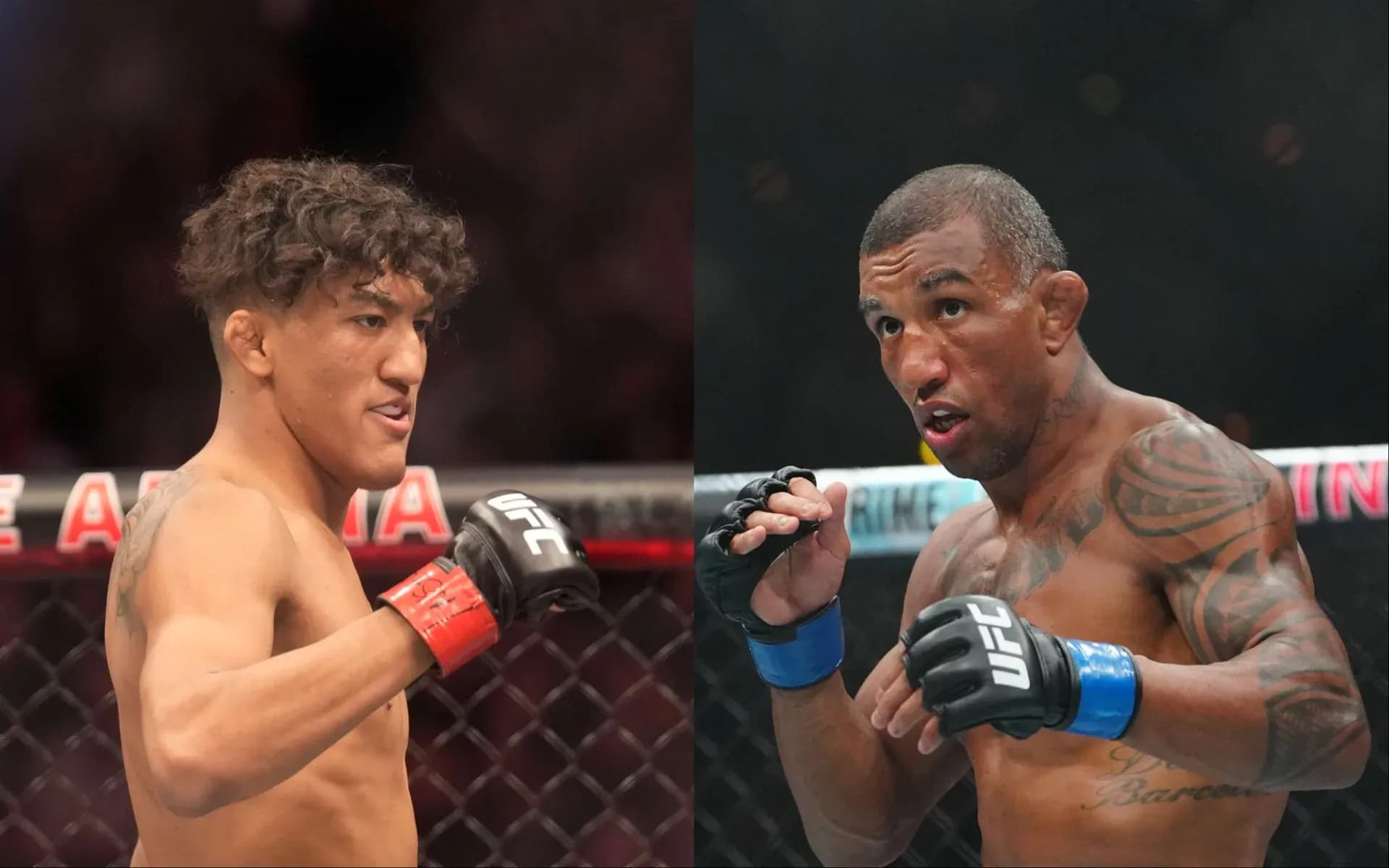
Barcelos was knocked unconscious during a fifth-round takedown, with Rosas Jr. immediately recognizing that something was wrong and signaling for the fight to be stopped. Medical personnel entered the Octagon, and Barcelos was subsequently taken by stretcher to a Level 1 trauma center in Las Vegas.
Raoni Barcelos’ collapse at the end of his UFC Fight Night main event against Raul Rosas Jr. was the kind of moment that makes the sporting result almost irrelevant.
Barcelos was knocked unconscious during a fifth-round takedown, with Rosas Jr. immediately recognizing that something was wrong and signaling for the fight to be stopped. Medical personnel entered the Octagon, and Barcelos was subsequently taken by stretcher to a Level 1 trauma center in Las Vegas.
The UFC later confirmed that Barcelos underwent a CT scan and comprehensive medical assessment. The promotion said he was stable, alert and responsive, with full movement, and would remain under medical supervision.
Questions Remain About Crisis Response
Those facts are reassuring. They also provide the appropriate starting point for a broader question: when something goes seriously wrong inside the Octagon, how should the UFC communicate with the public?
The answer is not necessarily that the UFC handled this situation badly. In fact, the available information shows several important things happened quickly: Barcelos received attention inside the cage, was transported to a trauma center and underwent medical evaluation.
The subsequent UFC statement provided a verified update rather than leaving the public entirely in the dark, but the incident demonstrates why crisis communication in MMA is uniquely difficult.
A fighter collapsing after a bout creates an immediate information vacuum. Thousands of people witness the incident, millions can see clips online, and social media begins filling that vacuum almost instantly. Before an official medical diagnosis exists, speculation can spread at extraordinary speed.
That appears to have happened following Barcelos' collapse.
His coach, Davi Ramos, subsequently confirmed that Barcelos had regained consciousness and was communicating while undergoing further tests. Ramos also shared an update from Barcelos' doctor, who said the fighter was lucid and oriented and would remain under observation as a precaution.
That distinction is important. There was an official medical update, but there was not, at least initially, a publicly disclosed definitive explanation for why Barcelos lost consciousness. That's where responsible communication becomes particularly important.
There is a temptation in sports media to fill every gap. If a fighter collapses, audiences naturally want to know exactly what happened. Was it a concussion? A neurological problem? The impact itself? Something unrelated?
Unless the medical team has established an answer, none of those questions should be presented as fact.
The UFC's initial statement largely avoided that trap. It communicated what was known: Barcelos had been transported to hospital, received a CT scan and comprehensive assessment, was stable and responsive, and remained under observation.
That may sound limited, but in a medical situation, limited verified information is preferable to confident speculation. There is another reason this matters specifically for the UFC.
The promotion is not merely a sports league in the conventional sense. Its product is built aroundcombate sport. Knockouts are promoted, replayed and discussed as part of the entertainment. That makes the boundary between sporting drama and medical emergency particularly sensitive.
When the fight ends with a spectacular knockout, the natural sporting instinct is to discuss the winner. When the opponent remains unconscious, that instinct has to change.
Raoni Barcelos Flags Herb Dean Upon Recognizing Seriousness of Situation
In Barcelos' case, Rosas Jr.'s reaction provided an important contrast. After recognizing that Barcelos was unconscious, he stopped attacking and alerted the referee. Following the fight, Rosas asked people to pray for his opponent rather than simply celebrating his victory.
That moment illustrated something fundamental about combat sports: the person being treated is not merely the other side of a sporting contest. He's a human being whose health suddenly matters more than the result.
The UFC's responsibility after such an incident is therefore slightly different from its responsibility after an ordinary fight. Speed matters, but accuracy matters more.
An Important Lesson About Covering Tense Situations in MMA
The promotion needs to communicate enough to prevent misinformation while respecting the limits of medical privacy. It needs to reassure audiences when reassurance is justified without promising outcomes that doctors cannot yet guarantee.
Barcelos' case shows how difficult that balance can be. The initial UFC statement was concise. It did not attempt to diagnose him or speculate about the cause of the collapse. It gave the public the essential information available at that point.
There is also a useful lesson here for everyone covering MMA. A frightening image does not automatically tell us what happened medically.
Neither does a fighter being conscious afterward mean that there is no injury. Barcelos' doctor said he needed to remain under observation for several days to assess his condition and ensure that he remained stable.
That is precisely why post-fight medical situations should be treated as evolving stories rather than conclusions reached from a few seconds of footage.
Key Takeaways from Barcelos' Collapse
So, does Barcelos' collapse raise questions about UFC crisis management? Yes, but not necessarily because the available evidence demonstrates a failure.
Instead, it highlights the enormous communication challenge the promotion faces when a serious medical incident occurs. The UFC has to provide information quickly while not pretending to know more than the doctors know. It has to counter misinformation without amplifying every rumor, and it has to remember that, in these moments, the fighter's wellbeing comes before the narrative surrounding the event.
The most responsible conclusion, therefore, is also the simplest. Barcelos received immediate attention, was transported to a Level 1 trauma center, underwent medical assessment and was reported by the UFC as stable, alert and responsive. His team subsequently provided further reassurance while confirming that he remained under observation.
There is no need to manufacture a controversy where the facts do not support one, but there is value in examining what the incident teaches us. In MMA, the most important update after a frightening injury is rarely the most dramatic one. It is the accurate one, and when a fighter's health is at stake, getting that distinction right may be the most important part of crisis management.