Colby Covington Reveals Why UFC Left Him “No Other Option” but To Join Real American Freestyle
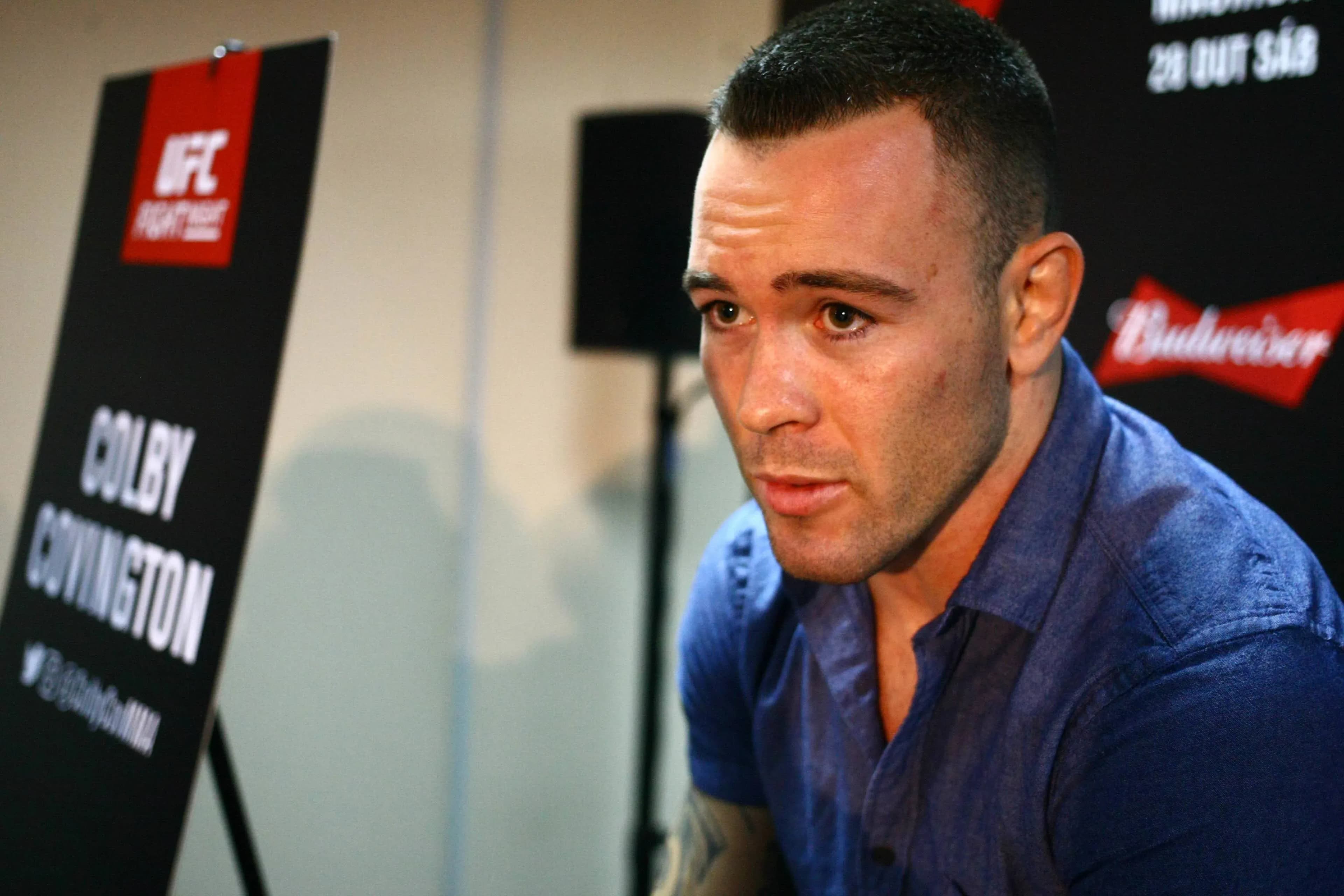
Colby Covington opens up on his move to Real American Freestyle.
For some fighters, ending their career in MMA is done by choice. Colby Covington, however, retired in May because of different reasons.
Colby Covington Says UFC Restrictions Left Him With No Choice
Covington (17-5-0) recently opened up about the circumstances that led to his retirement from the UFC, explaining that he initially tried to balance both MMA and his newfound opportunity in Real American Freestyle.
Before making his RAF debut, the former UFC Interim Welterweight Champion sought permission from the promotion to compete in the new wrestling organization. According to Covington, UFC Chief Business Officer Hunter Campbell approved the appearance, but with one important condition.
Divulging the events in a recent RAF promo video, Covington said, "The first RAF match that I did, I had to go get permission from the UFC, from the great Hunter Campbell."
The arrangement worked at first because Covington wasn't facing active UFC fighters. However, the restrictions became increasingly difficult to accept as the RAF continued attracting elite mixed martial artists.
"He pretty much reciprocally told me, 'You're able to wrestle, you're able to do your thing, Colby. But no active UFC guys can compete against each other.'"
Covington Mentions UFC Wouldn't Approve of Active Competitors Wrestling Each Other
Covington said he respected that decision in the beginning, but eventually realized it conflicted with the reason he wanted to compete in the RAF in the first place - "At first, I wasn't going against any active guys but then eventually I realized that I wanted to compete against the best guys in the world. Those were active guys."
With the UFC unwilling to allow active roster members to face one another in the RAF, Covington says the decision became unavoidable, saying, "So, I knew that to open up and free these matches, I had to retire. There was no other option."
“I knew it was a tough decision because I still loved fighting.” Despite walking away from MMA, Covington admitted the choice wasn't easy: "Fighting is something that's inside you, but my first and true passion was always wrestling."
For a fighter who built his career inside the Octagon, it was a rare glimpse behind the bravado, revealing that the transition wasn't about leaving combat sports behind, but about returning to his roots, to the mats where he learned his basics of wrestling.
Colby Covington has Quickly Become One of RAF’s Biggest Names
If there were doubts about whether Covington's wrestling credentials would translate to Real American Freestyle, he has already answered them emphatically.
Since joining the promotion, the former NCAA Division I All-American has established himself as one of the promotion’s marquee attractions, leaning on the wrestling pedigree that long formed the foundation of his MMA success.
In a span of a few months, the 38-year-old has put together an unbeaten run in the promotion, earning victories over high-level opposition, including former UFC champions Chris Weidman and Luke Rockhold, as well as Dillon Danis.
Arman Tsarukyan Awaits Colby Covington Saturday
His biggest challenge, however, is still to come. Covington is set to face top UFC lightweight contender Arman Tsarukyan at RAF 11 on July 18, in one of the most anticipated matchups in RAF history.
The bout pits two of the sport's most accomplished wrestlers against one another and represents exactly the kind of crossover contest Covington says would never have been possible had he remained an active UFC fighter. Ironically, it's also the matchup that validates the difficult decision he made.
By stepping away from the UFC, Covington gained the freedom to test himself against the elite wrestlers he had long wanted to face. Whether that gamble ultimately proves worthwhile remains to be seen, but for the former welterweight title challenger, the move was never about turning his back on fighting; it was more about chasing the passion that first brought him into combat sports.