Africa Has the Fighters, So Why Isn't Ki MMA Coming to the Continent?
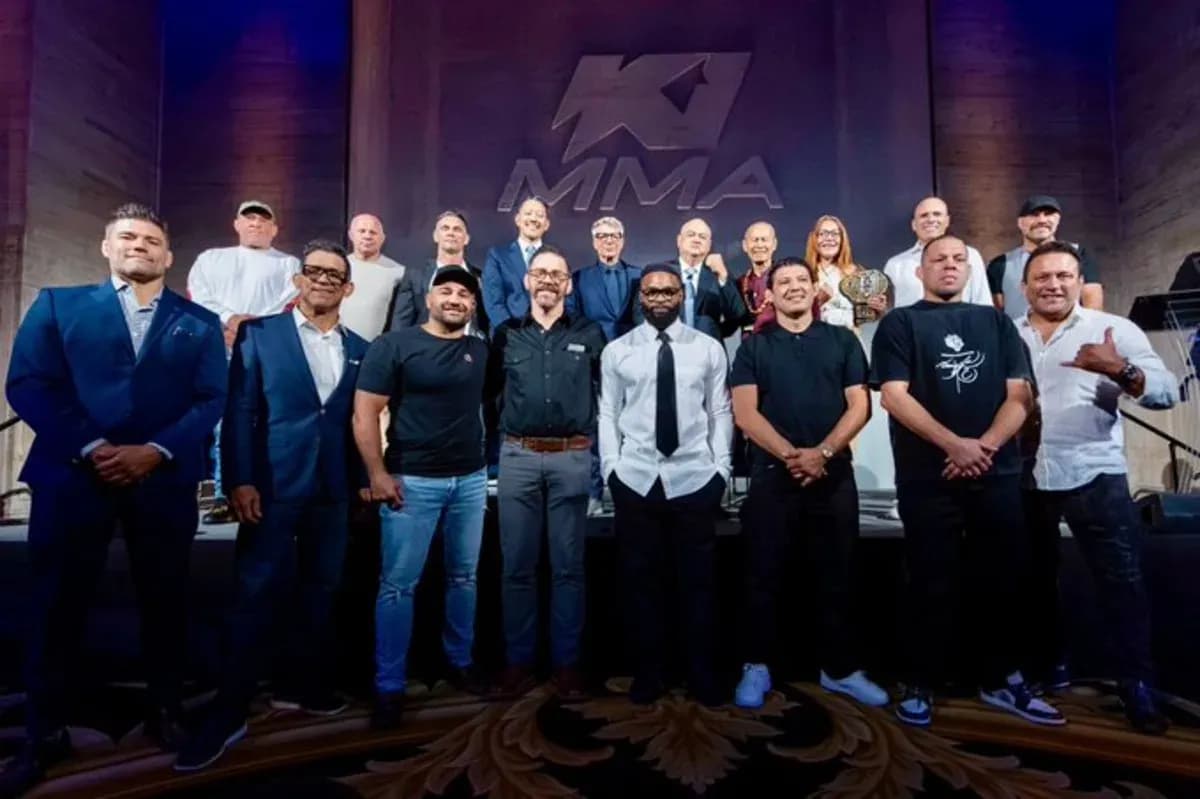
When Ki MMA was announced, one part of the promotion's ambitious launch immediately stood out: Africa is not a part of it
When Ki MMA was announced, one part of the promotion's ambitious launch immediately stood out: Africa is not a part of it. Looking at the African continent and what it has to offer, this might be a big missed opportunity for the Scott Coker-led promotion.
Ki MMA Is Already Thinking Globally - Just Not About Africa
There is, admittedly, some logic to the way that Ki MMA has structured its inaugural tournament. A 32-man tournament divided between four continents makes the numbers relatively simple: eight fighters per region, three events in those regions, and then a global grand finale. The inaugural tournament will feature the featherweight division, and it is set to debut in early 2027.
Whilst the full extent of Ki MMA's plans are yet to be revealed, the four continents set to participate are known: North America, South America, Europe, and Asia. Perhaps the four-continent structure makes the tournament format manageable for the promotion's first major undertaking, but that does not make Africa's omission any less glaring.
If you are building a global featherweight tournament and looking for regions with legitimate depth, Africa isn't some emerging MMA market that needs to be introduced to the sport. There are already fighters on the continent - a lot of them.
Africa Has a Featherweight Pool Worth Exploring
The most obvious argument for African inclusion is the featherweight division itself. Africa has spent years producing fighters at 145 pounds through promotions such as Extreme Fighting Championship (EFC), BRAVE Combat Federation, UAE Warriors, and - most recently - PFL Africa.
Take Igeu Kabesa, for example. The South African-based veteran has a 19-2 professional record, and is currently still serving as the EFC Featherweight Champion. Throughout his career, he has captured several titles - including a stint as the promotion's lightweight champion.
Then there is Nicholas Hwende. The Zimbabwean fighter has competed at both bantamweight and featherweight, and is the current BRAVE CF Featherweight World Champion. He previously held the promotion's bantamweight title, making him only the second-ever two-division champion in BRAVE CF history.
Another Zimbabwean standout in the featherweight division is current UAE Warriors Intercontinental Featherweight Champion Sylvester Chipfumbu. He established himself on the continent as one of the most intriguing bantamweight prospects, before making a permanent move up to featherweight a few years back. Since then, he has seriously found his stride and represents the continent on the highest level.
Ken Sekeletu is another name that immediately comes to mind. The Zambian fighter has established himself at 145 pounds, even serving as the interim EFC Featherweight Champion in 2025. Sekeletu is an absolute finisher, and he is currently the Fight 2 One Featherweight Champion in Spain.
Of course, Faeez Jacobs also deserves consideration. The South African currently competes across both bantamweight and featherweight, currently holding both titles in the EFC (interim title in the featherweight division). Jacobs is another example of a fighter who has the experience, physicality, and versatility to make a name for himself at 145 pounds.
Those are just some names in the division, and this is without even considering the bantamweights who could potentially move up. The point is not that Ki MMA should automatically sign these specific fighters, but there is genuinely a pool worth scouting on the continent.
PFL Africa Has Already Shown What's Possible
Perhaps the strongest argument that Africa should not be overlooked is PFL Africa. PFL only launched a dedicated African tournament in 2025, despite the organisation having already established itself as a global MMA promotion and having regional tournaments elsewhere. When it finally arrived, however, the continent showed exactly what it had been sitting on.
The inaugural PFL Africa season featured the heavyweight, welterweight, featherweight, and bantamweight divisions. The events took place across South Africa, Rwanda, and Benin. At the end of it all, four new champions were crowned, but the deep talent pool of the continent (and the diaspora) got to be platformed on the grandest scale.
Beyond that, the continent's fans came out in their numbers for the events. That is exactly what makes the timing of Ki MMA's announcement so interesting. Africa was once again asked to wait for a major tournament to arrive. PFL eventually came. When it did, it found champions, a great pool of talent, and a fanbase that understands the MMA game.
The Infrastructure Argument Is Real - But It's Not the Whole Story
There is one criticism of bringing major global MMA events to Africa that is difficult to completely dismiss: the infrastructure. Hosting a massive international sporting event requires more than simply finding a building with enough seats, but taking all other logistical considerations into account. But that argument becomes much weaker when the conversation is about simply hosting a regional tournament event.
Africa has venues capable of hosting major sporting events. South Africa is an obvious example. Mixed martial arts promotions have successfully staged events at the GrandWest Arena in Cape Town and the SunBet Arena in Pretoria.
Rwanda's BK Arena is another standout hosting venue. It is one of the major venues associated with the Basketball Africa League, which has helped establish Kigali as one of the continent's significant sporting hubs.
Yes, there are infrastructure challenges across parts of Africa. But saying that the continent simply does not have venues capable of hosting a regional Ki MMA tournament doesn't tell the whole story. We have already seen the proof of concept.
Africa Keeps Being Asked to Play Catch-Up in MMA
Africa's problem in global MMA is not necessarily a lack of fighters. It's that the continent is constantly expected to catch up after everyone has already had the opportunity to establish themselves. Major promotions launch their tournaments and events elsewhere, with their stars and ecosystems there.
Once the machinery is already running, Africa gets invited to participate. The frustrating part about Africa's position in MMA is that the continent is constantly expected to prove itself after everyone else has been given the opportunity to prove themselves first.
Maybe Ki MMA simply needed four continents for the sake of its tournament format. Fair enough. If you're looking for the next generation of global MMA stars, why wait until Africa has already caught up to start looking here?
There is an ecosystem on the continent. It's admittedly not perfect, but if the goal is genuinely to build a global MMA promotion, those limitations should be reasons to develop the market - not to exclude it from the first chapter.
At some point, you have to stop asking why Africa is behind and start asking why it is so rarely given the same starting line.