Farid Basharat’s Release Sparks a Widespread Debate About Fighter Retention
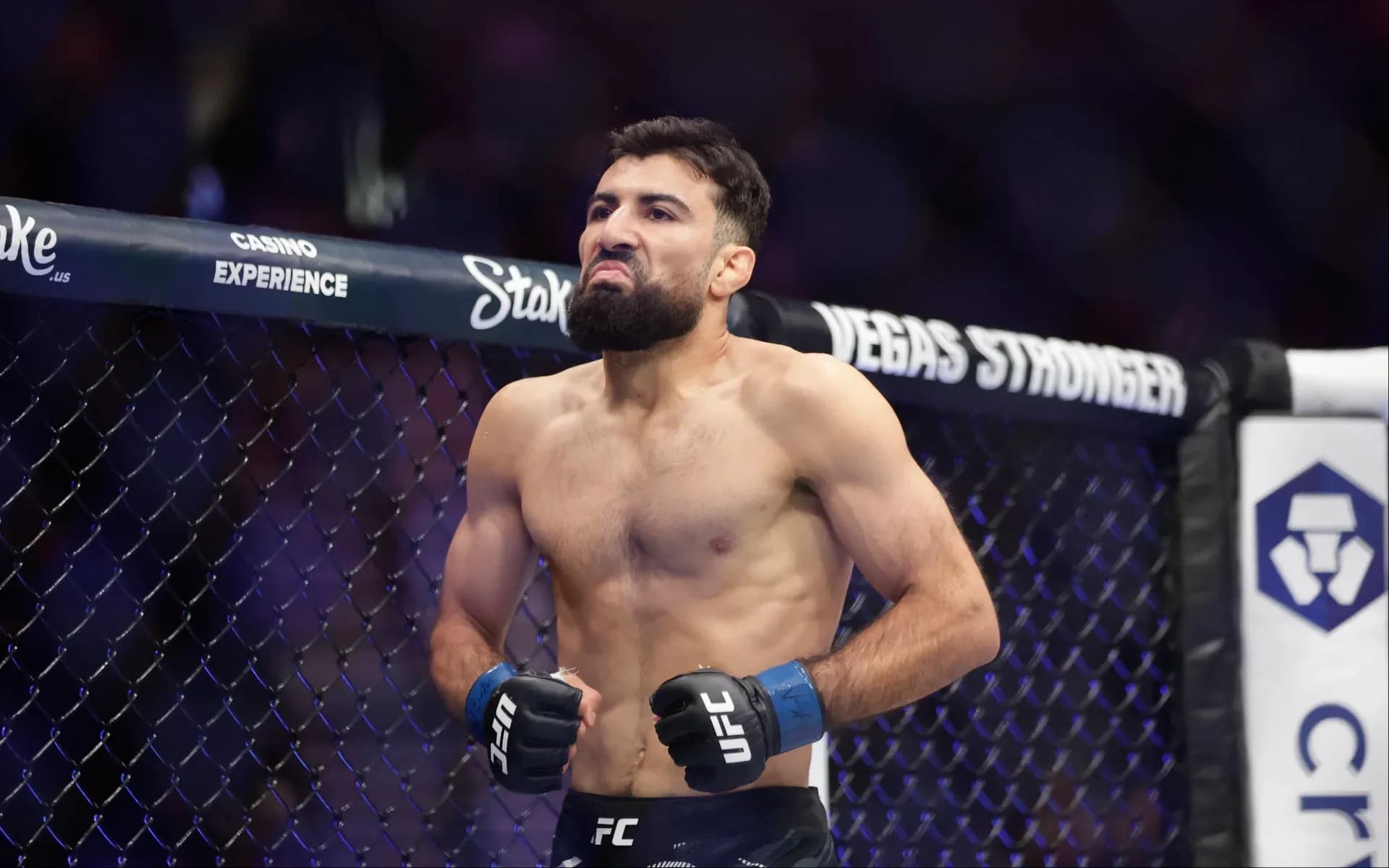
Farid Basharat being released from the UFC has brought about questions on fighter retention:
The UFC has never promised to keep every winning fighter on its roster. Professional MMA is a business, contracts expire, and organizations have the right to make difficult decisions about their future.
However, Farid Basharat’s departure raises a question that deserves considerably more attention: How much does an undefeated record actually matter when a fighter’s contract comes to an end?
No New Deal for Farid Basharat, Despite Perfect Record
Basharat reportedly left the UFC after completing his contract with a perfect 7-0 promotional record. His overall professional record stood at 16-0, and his final UFC appearance saw him defeat John Garza at UFC 329 in July. Despite those results, the promotion did not offer him a new deal, according to reporting by MMA Fighting.
That decision has sparked debate about the UFC’s approach to roster management, particularly when it comes to fighters who consistently win without necessarily delivering the finishes or performances that attract mainstream attention.
The issue isn't whether the UFC should retain every undefeated fighter. It's whether winning, developing, and competing at a high level still provide sufficient value when commercial considerations increasingly influence the sport.
An Undefeated Record Should Count for Something
Basharat’s record makes his departure difficult to dismiss as an ordinary roster change. Going 7-0 inside the Octagon is no small achievement. UFC fighters face increasingly difficult opposition as they progress, and maintaining an unbeaten promotional record requires technical consistency, preparation, and the ability to adapt under pressure.
Basharat demonstrated those qualities throughout his run. Nevertheless, an undefeated record does not automatically make someone a future champion. Opponent quality matters, performances must be evaluated individually, and a fighter’s ceiling cannot be measured exclusively through wins and losses.
That is a reasonable argument for the UFC to consider when deciding whom to retain, but the opposite extreme is equally problematic. If a fighter wins seven consecutive UFC bouts and still can't secure another contract, what incentive does the organization provide for athletes who prioritize risk management and tactical discipline?
Fighters should not be rewarded solely for protecting an unbeaten record. They should, however, receive meaningful recognition for repeatedly defeating the opposition placed in front of them.
Is Entertainment Becoming More Important than Winning?
The controversy became more complicated after UFC CEO Dana White addressed Basharat’s departure. White suggested that a fighter could be released for reasons beyond performance, including difficulties dealing with matchmakers or turning down fights.
He also stated that there was a reason an undefeated fighter with seven UFC victories would not receive a new contract, without publicly specifying the explanation. Basharat, meanwhile, disputed the idea that his departure reflected his ability inside the cage. Speculation also emerged about whether his relatively limited number of finishes played a role.
Those explanations must remain separate from confirmed facts. The UFC has not publicly established that Basharat was released specifically because of his fighting style. Still, the situation highlights a genuine tension within MMA.
A fighter who controls opponents through wrestling, positional dominance, and disciplined decision-making may be extremely effective without producing spectacular finishes. Another fighter might generate greater excitement while accepting more risks and losing more frequently.
Which athlete provides greater value? The answer depends on what the promotion wants. From a sporting perspective, the fighter who wins consistently deserves serious consideration. From a commercial perspective, an organization also evaluates audience interest, ticket sales, broadcast appeal, and the potential to build future stars.
Those priorities are not mutually exclusive. The problem arises when fighters cannot clearly understand how they will be evaluated. If finishing ability is essential to long-term retention, the promotion should communicate that expectation rather than leaving athletes to interpret their future through speculation.
Muhammad Mokaev’s Criticism Adds Another Dimension
Former UFC flyweight Muhammad Mokaev has publicly criticized the promotion over the Basharat situation. Mokaev, who also departed the UFC despite an unbeaten promotional record, argued that pressure on fighters to adopt more entertaining styles could undermine the integrity of competition. He also warned against damaging a released fighter’s reputation through unexplained public statements.
His criticism doesn't prove that Basharat’s fighting style caused his departure. It does, however, illustrate why the controversy resonates beyond one bantamweight.
Fighters have limited control over several factors that influence their careers. They do not choose every opponent, determine their placement on a card, or control promotional decisions about their visibility. When they perform the job required of them and continue winning, uncertainty about what comes next can become frustrating.
The UFC is not obligated to offer a new contract, but transparent communication would help distinguish legitimate business decisions from speculation about a fighter’s conduct or value.
That distinction matters because reputations follow athletes throughout their careers. Other promotions, sponsors, and potential opponents may interpret public comments differently, even when the complete circumstances remain unknown.
What Should Fighter Retention Look Like?
The UFC operates in a competitive market and must regularly create roster space for new prospects. Dana White’s Contender Series has become an important route for introducing emerging talent, and established fighters cannot expect permanent employment simply because they have accumulated victories.
However, roster management should balance future potential with demonstrated performance.
A transparent evaluation system could consider winning percentage, opponent quality, finishing ability, availability, divisional relevance, and professional conduct. No single factor needs to determine a contract decision, but fighters should have a clearer understanding of the standards they are expected to meet.
The promotion could also benefit from explaining departures without unnecessarily damaging an athlete’s reputation. A contract expiring without renewal is not automatically evidence of misconduct or an inability to compete.
That principle should apply whether the departing fighter is undefeated, a former champion, or a prospect still developing inside the Octagon.
The Bigger Picture
Farid Basharat’s departure is not proof that the UFC no longer values winning. Nor does it establish that every fighter with a strong record deserves a new contract. Instead, it exposes the gap between sporting achievement and commercial opportunity.
The UFC has every right to shape its roster around its business priorities. Fighters, however, deserve clarity about the standards governing those decisions, particularly when public speculation can affect their future opportunities.
Basharat leaves the promotion with an unbeaten UFC record and an undefeated professional résumé. Whatever the reasons behind the decision, those accomplishments remain part of his career.
The larger question is whether the UFC can continue attracting competitive athletes while ensuring that winning remains a meaningful measure of success. In a sport where careers are short and opportunities are limited, that balance deserves more than a vague explanation after the contract has already expired.