
Josh Hokit Explains Why His Michelle Obama Remark Was ‘Meant To Be a Compliment’
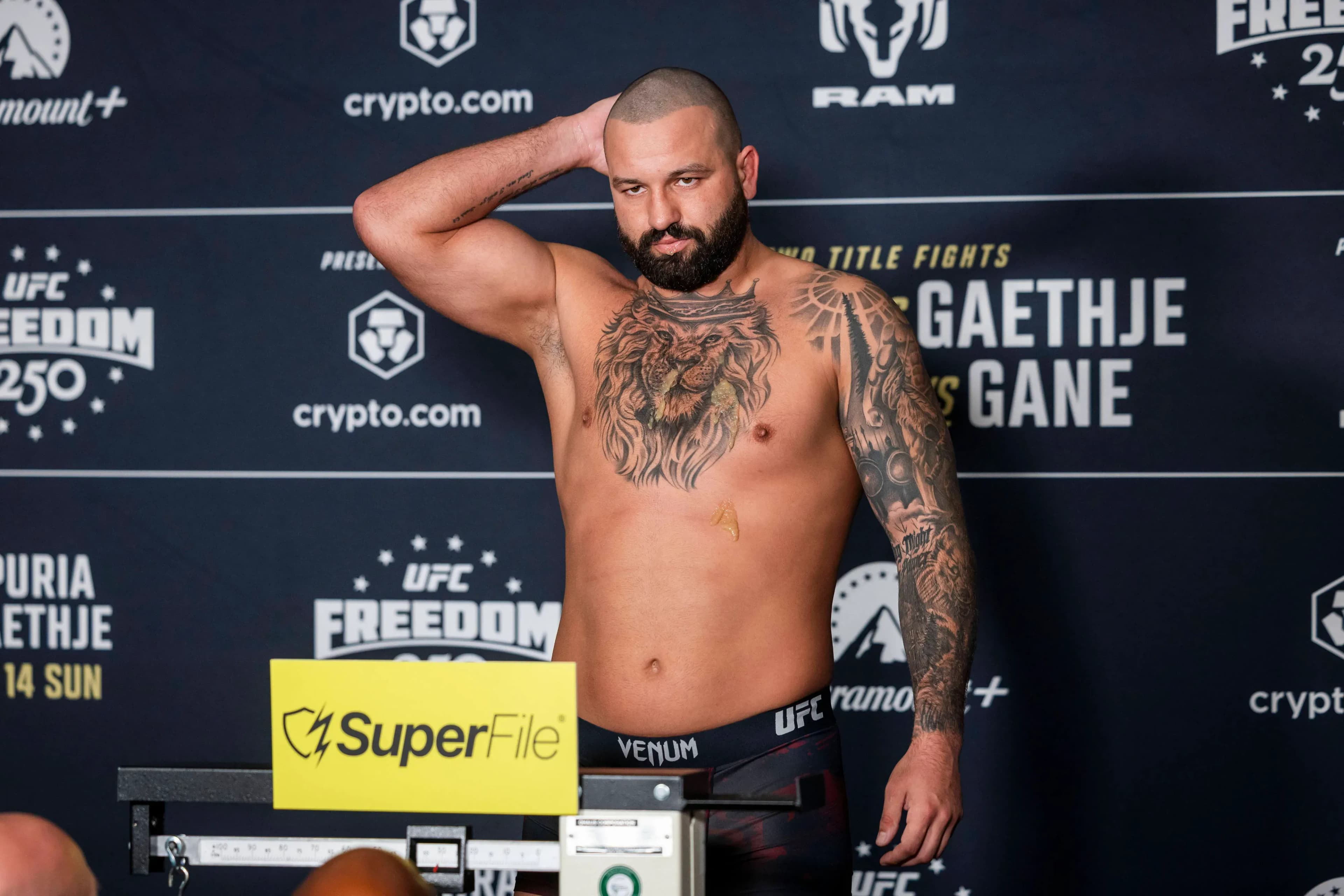
Despite fanning the flames of an event already embroiled in controversy, Josh Hokit appears defiant, refusing to take the fall or offer a proper apology for his UFC Freedom 250 incident
More than a week ago, the on the White House lawn, the UFC heavyweight made post-fight remarks about Michelle Obama being a man during his in-cage interview with Joe Rogan.
Now, despite backlash from all corners of the globe, the undefeated heavyweight is insisting the comment was never intended as an insult. In fact, according to Hokit, it was supposed to be the exact opposite.
Josh Hokit says his Michelle Obama remark was intended as praise
On Tuesday, during an appearance on the popular “The Ariel Helwani Show,” Hokit attempted to explain the thinking behind the comment that quickly dominated headlines and drew widespread criticism online.
"I thought I was giving her a compliment," Hokit justified while Helwani appeared unconvinced by the explanation, noting that few people seemed to have interpreted the remark that way.
The 28-year-old, however, doubled down, arguing that his statement was rooted in what he considers traditionally masculine traits such as resilience and perseverance. "Michelle Obama being a man … it’s like, she knows how to deal with adversity. She knows how to work hard like a man when the times get tough. " Hokit explained.
Genesis of Josh Hokit's Remarks
The controversy stems from UFC Freedom 250 on June 14, where Hokit secured a statement victory over veteran heavyweight Derrick Lewis in front of a packed audience gathered on the White House lawn.
Riding the high of arguably the biggest win of his young UFC career, the former collegiate football player unexpectedly used his post-fight interview to proclaim, "And lastly, Michelle Obama is a man. Am I right, America?"
The comments immediately triggered a mixed reaction from those in attendance and on social media. Even Rogan appeared caught off guard, quickly stepping away and wrapping up the interview with a brief introduction of Hokit.
Hokit Refuses to Apologize, Cites Free Speech as Motivation
Despite the backlash, Hokit made it clear that he has no intention of retracting his comments or apologizing. When asked by Helwani why he chose that particular moment to make the remark, Hokit suggested that the setting itself played a role in his decision.
"I thought it was a perfect opportunity to show the world how great this country is with freedom of speech. You go somewhere and you say something like that and you die. And I’m not suicidal, by the way. I’m in good spirits. I’m a little under the weather right now, but other than that, I’m good. And so in other parts of the world, you say something like that and you’re not here to speak to Ariel Helwani, you know he said."
Later on, the Californian went on to argue that making similarly provocative statements in some parts of the world could carry far more serious consequences, adding that he viewed the moment as an opportunity to "take a jab."
The 28-year-old also emphasized that standing by his statements is something fans should expect moving forward. "That's one thing about my career," Hokit said. "You'll never hear me backtrack from what I say."
Dana White Took Stand Against Hokit's Remarks
However, not everyone within the UFC shared that stance. In fact, UFC CEO Dana White publicly distanced himself from Hokit's comments, stating that while he supports free speech, he opposes what he described as "nasty and false things about people's families."
White's criticism was notable given his long-standing reputation for defending fighters who come under scrutiny for controversial remarks.
For Hokit, though, controversy appears to be becoming part of the package. Since arriving in the UFC, the undefeated heavyweight (10-0) has built a reputation not only for his performances inside the cage but also for his willingness to provoke reactions outside of it.
Whether fans buy his explanation or not is another matter entirely, but if Hokit has made one thing clear, it's that he has little interest in apologizing for or retreating from anything he says.
.webp&w=3840&q=75)
.webp&w=3840&q=75)